What Is Blue Light?
Everything you need to know about high-energy visible light, how digital screens expose your eyes to it, and what the latest science says about protecting your vision.
The Blue Light Spectrum
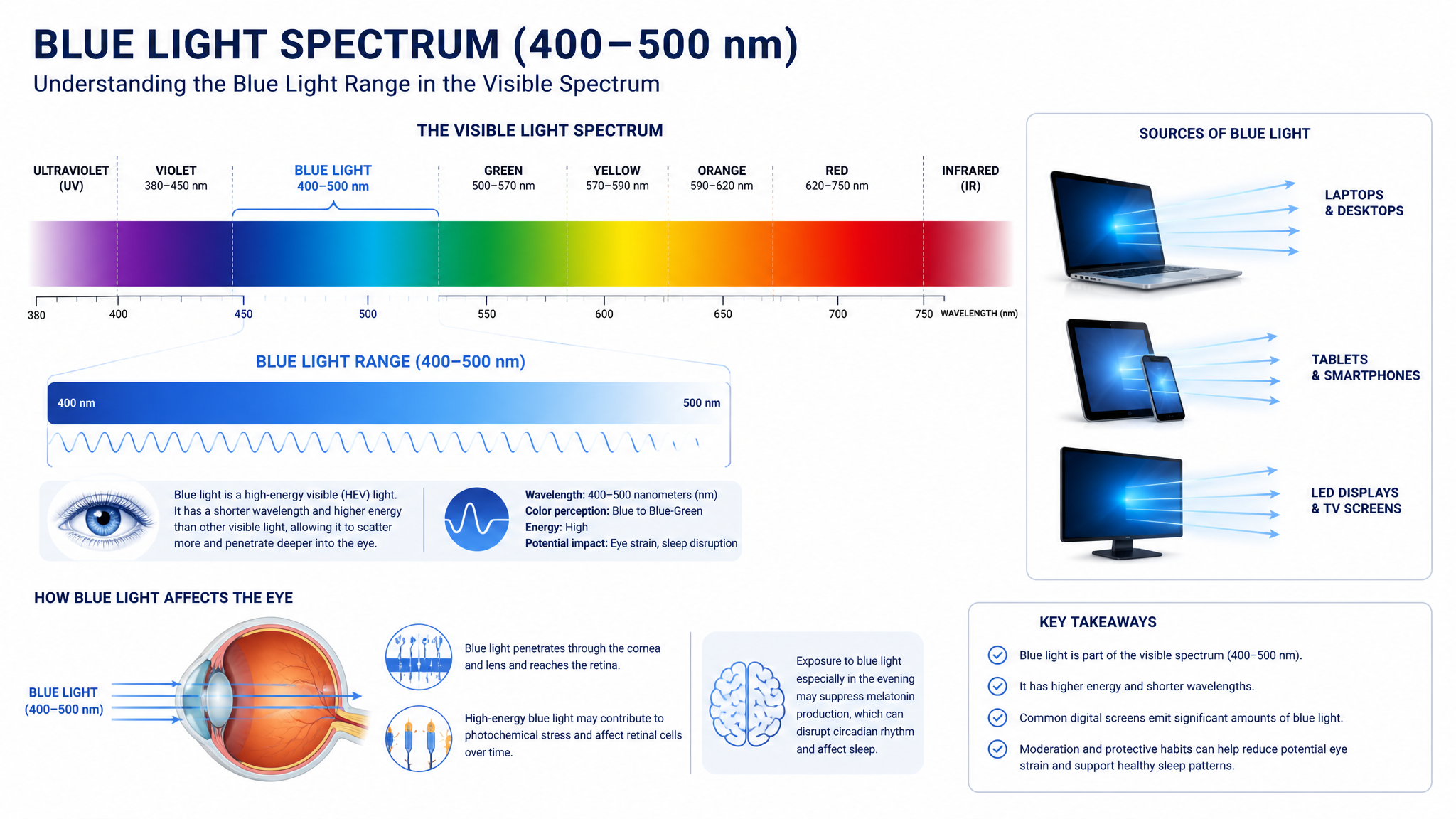
Blue light is high-energy visible (HEV) light with wavelengths between 400–500 nanometers. It sits just next to ultraviolet light on the electromagnetic spectrum, making it one of the most energetic forms of visible light.
The sun is the largest natural source of blue light. However, digital screens (smartphones, tablets, computers, LED TVs) and LED lighting also emit significant amounts of blue light at close range — and we’re exposed to these sources for hours every day.
While not all blue light is harmful — some wavelengths help regulate circadian rhythms and boost alertness — prolonged close-range exposure may contribute to digital eye strain and affect sleep quality.
How Blue Light Affects Your Health
Eye Strain & Fatigue
Extended screen time can cause symptoms like dry eyes, blurry vision, headaches, and difficulty focusing — collectively known as digital eye strain or computer vision syndrome. The American Academy of Ophthalmology attributes this to reduced blinking and prolonged near-work.
Sleep Disruption
Blue light in the evening suppresses melatonin production, making it harder to fall asleep. Experts recommend reducing screen time 1–2 hours before bed and using warm-toned lighting at night to protect circadian rhythms.
Macular Health Concerns
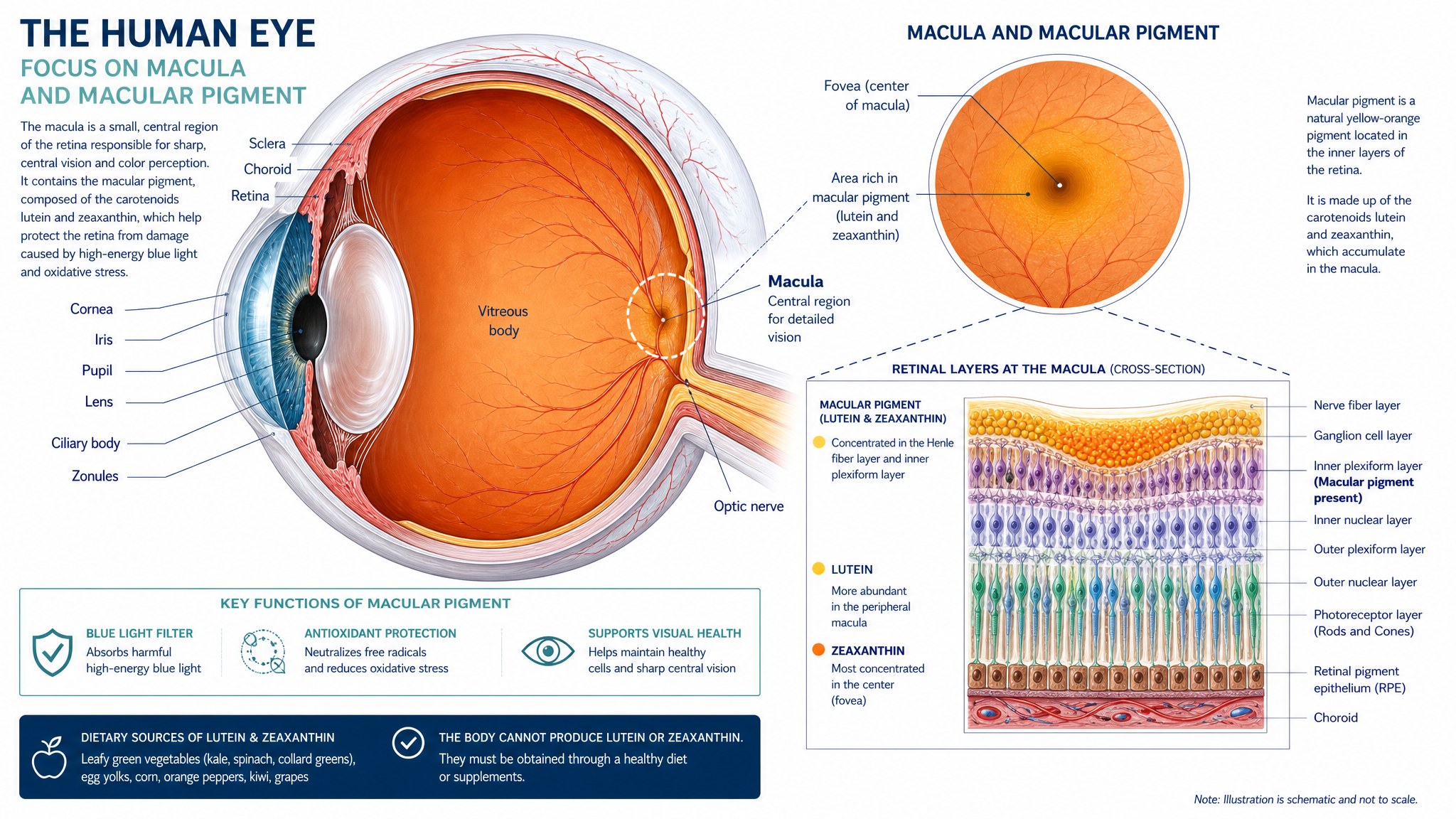
The macula contains pigment that filters blue light naturally. Over a lifetime, oxidative stress from light exposure may contribute to macular degeneration. Research suggests carotenoid supplementation helps rebuild this protective pigment layer.

The 20-20-20 Rule & Beyond
Eye care professionals recommend the 20-20-20 rule: every 20 minutes, look at something 20 feet away for at least 20 seconds. This simple habit helps reduce eye fatigue from screen work.
- Follow the 20-20-20 rule during screen sessions
- Blink frequently to keep eyes moist
- Adjust screen brightness to match your environment
- Position screens 20–26 inches from your eyes
- Consider supplements with lutein and zeaxanthin for macular support
Lutein & Zeaxanthin: Your Natural Defense
Lutein, zeaxanthin, and meso-zeaxanthin are carotenoid pigments concentrated in the macula — the central part of the retina responsible for sharp, detailed vision. These pigments serve two critical roles:
Blue Light Filter
They absorb high-energy blue light before it reaches the delicate photoreceptor cells, acting as internal “sunglasses” for the retina.
Antioxidant Shield
They neutralize reactive oxygen species (free radicals) produced by light exposure, reducing oxidative damage to retinal tissue over time.
The NEI’s 10-year AREDS2 follow-up study confirmed that supplementation with 10 mg lutein and 2 mg zeaxanthin safely reduced the risk of progressing to advanced AMD by approximately 26%.
Support Your Eye Health Today
Explore our reviewed supplements with ingredients backed by clinical research.
Browse Supplements